01 — DefinitionWhat cut edge corrosion is.
Cut edge corrosion is the breakdown of the protective coating at the cut ends of profiled metal roof sheets, followed by rusting of the exposed steel beneath. Profiled sheets — the coated steel cladding on most industrial and warehouse roofs — leave the factory with a protective metallic layer and an organic coating such as plastisol over the whole face. But every sheet is cut to length, and at each cut the raw steel core is exposed in a thin line along the edge.
Those cut lines sit in predictable places: at the gutter overhang, where the sheet ends project over the eaves gutter, and at the end laps, where one sheet overlaps the next partway up the slope. These are exactly the places that stay wet longest, which is why cut edge corrosion is a defect of specific locations rather than the whole roof. From the ground the roof can look sound; at the gutter line and the lap lines, the coating is peeling and the steel is rusting.
It is one of the most common defects on industrial roofs from roughly the 1970s through the 1990s and beyond, and it is progressive: left alone it does not stabilise, it perforates. It is also, caught early, one of the more treatable defects an industrial roof can have — which makes the timing of the survey the most important decision an owner or facilities manager takes about it.
02 — CauseWhy it happens.
The cause is the combination of exposed steel and retained moisture. The coating system protects the face of the sheet, but the cut edge is bare steel with only the thin sacrificial metallic layer at its rim. Where that edge stays dry, corrosion is slow. Where it stays wet, corrosion runs.
The gutter overhang is the worst case. The sheet end hangs over the gutter, so every rainfall washes across the cut edge, and gutter debris, standing water and condensation keep the underside damp between rainfalls. The end laps are the second front: capillary action draws water into the tight gap between the overlapping sheets, and once in, it dries out slowly. The lap sealant that was meant to keep water out of the joint hardens and fails with age, letting more moisture in and holding it against both cut edges at once.
Age and environment set the pace. Coastal exposure, industrial atmospheres and north-facing slopes that stay damp accelerate the breakdown; the age of the coating determines how much resistance is left. On industrial estates across Gateshead, Teesside and the wider North East — where a large share of the stock is coated steel portal-frame sheds now several decades old — cut edge corrosion at the gutter line is close to a default survey finding rather than a surprise.
03 — ProgressionHow it progresses.
Cut edge corrosion follows a recognisable sequence, and the stage reached determines what treatment is still available.
Edge peel. The coating loses adhesion at the cut edge and begins to lift and peel back from the rim, typically a few millimetres at first. At this stage the steel loss is minimal and the defect is easy to miss from anywhere but roof level.
Rust creep. Corrosion tracks back under the lifted coating, feeding the peel and widening the band of exposed rusting steel along the sheet end. The visible sign is a rust-stained strip along the gutter edge or lap line, with coating flaking away above it.
Perforation. The steel thins until it holes. Perforation at the gutter overhang drops water into the gutter or, where the holing reaches back past the gutter line, into the building. Perforation at an end lap feeds water into the lap, where it travels along the joint and shows up inside the building somewhere unrelated to the hole.
Leaks and secondary damage. Once water is through, the damage stops being confined to the sheet edge: insulation gets wet, linings stain, and the leak-chasing begins. By this stage the affordable treatment window has narrowed, because coating systems need sound steel to bond to, and perforated sheet ends no longer provide it.
The whole sequence plays out over years, not weeks — which is precisely why it is suited to planned inspection and poorly suited to waiting for a leak. The defect gives a long warning; the warning is only visible from the roof.
04 — AssessmentHow it is assessed.
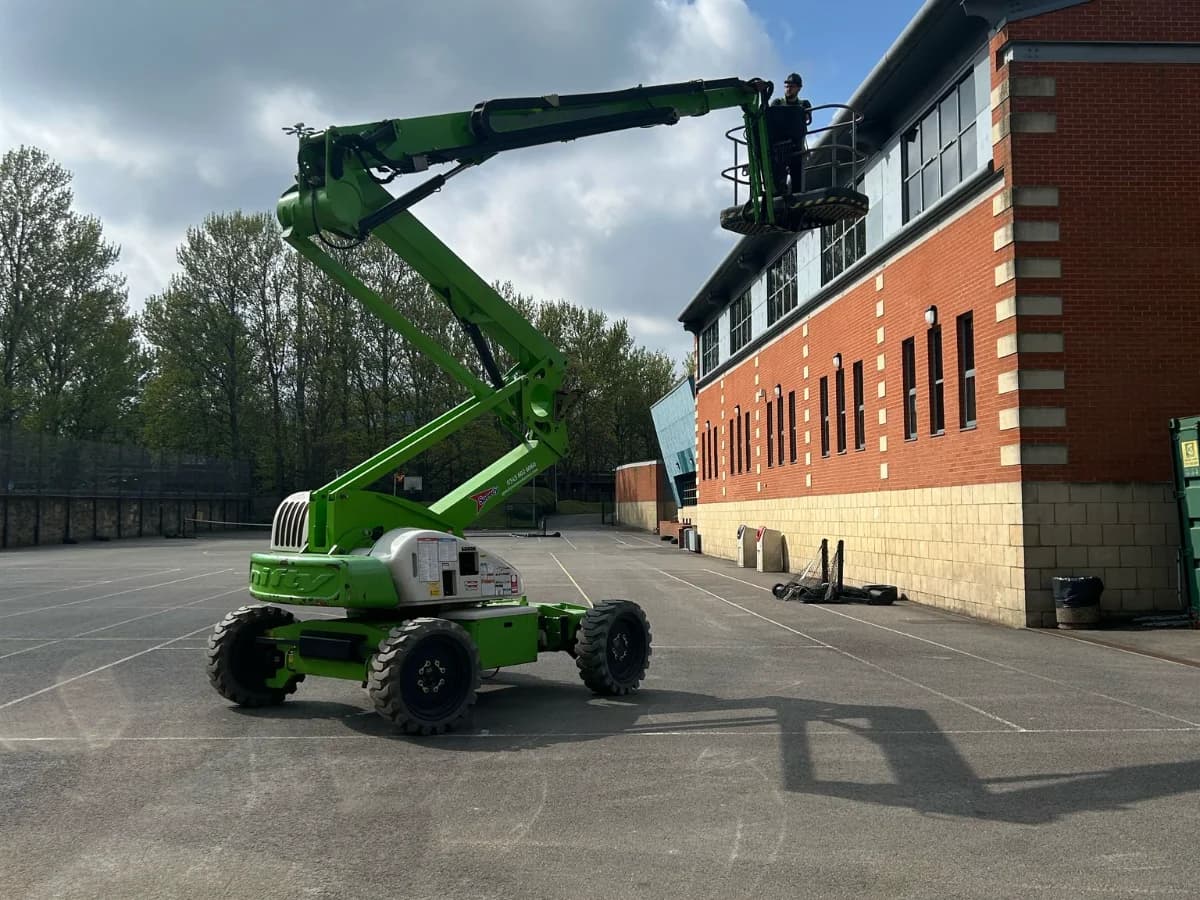
Cut edge corrosion cannot be assessed from the ground or from inside the building. The defect lives at the gutter overhang and inside the end laps, so assessment means roof-level inspection with safe access — and the gutter runs and lap lines walked and examined, not viewed from a distance.
A competent assessment produces three things. First, a photographic record: the gutter edges and lap lines photographed along their length, so the condition is evidenced rather than described, and so future inspections have a baseline to compare against. Second, a severity categorisation: each run of edge graded from early peel through active rust creep to perforation, mapped across the roof so the report shows where the roof sits in the progression and how evenly. A roof is rarely one grade throughout — south and north slopes differ, and sheltered edges outlast exposed ones. Third, the context that decides the treatment route: the condition of the coating on the main sheet faces, the state of the gutters themselves, the lap sealant condition, and any perforation already letting water in.
That last part matters because the edge is not assessed in isolation. A roof with sound faces and early edge peel is a different proposition from a roof where the edges are perforating and the face coating is chalking and delaminating too. The survey establishes which of those buildings you own before anyone proposes a treatment for it.
05 — TreatmentTreatment options, from edge to whole roof.
Treatment routes run from localised to total, and the right one depends on what the survey found — not on what a product brochure prefers. In general terms the options are:
- Isolated edge treatment and seam sealing. Where breakdown is early and confined, the affected edges are prepared — loose coating removed, rust treated, the steel brought back to a sound surface — and a repair coating applied over the cut edge and lap line, with failed lap sealant renewed. Suits roofs caught at the peel or early creep stage.
- Gutter-line coating systems. Where corrosion runs along the full gutter edge, the treatment follows it: a coating system applied as a continuous band along the gutter overhang and sheet ends, often together with a gutter lining where the gutters themselves are failing. This treats the highest-risk zone without coating a roof whose faces remain sound.
- Full-roof coating. Where the face coating is also at the end of its life — chalking, delaminating, corroding at fixings — edge treatment alone leaves the rest of the failure in place. A full-roof coating system, with the cut edges and laps prepared and treated as part of the works, addresses the roof as a whole and resets its maintenance cycle.
- Sheet replacement. Where sheets are perforated, coatings have nothing sound to bond to at the failure points. Individual sheet or sheet-end replacement deals with perforation; where perforation is widespread, re-sheeting or over-sheeting the roof becomes the honest comparison, and coating stops being a saving.
The routes are not mutually exclusive — a common outcome is sheet replacement at the worst runs combined with a gutter-line system across the rest. What decides between them is the survey record: severity grades, photographs and the condition of the roof around the edges. A treatment specified without that record is a price, not a recommendation.
06 — PreventionPrevention, maintenance and the replacement question.
Cut edge corrosion rewards planned maintenance more than almost any other industrial roofing defect, because the progression is slow and the early stages are cheap to treat. A planned preventive maintenance arrangement that includes roof-level inspection of the gutter edges and lap lines, gutter clearance so the sheet ends are not sitting in standing water and debris, and prompt treatment of early peel keeps the defect in its treatable stage — and produces a dated photographic record that shows whether it is stable or advancing between visits.
The replacement question should be faced squarely when it arrives. Treatment makes sense while the steel is sound and the rest of the roof has serviceable life left. It stops making sense when perforation is widespread, when the face coating is failing across the roof, when repeated treatments are being layered onto the same edges, or when the works cost approaches re-sheeting a roof that would then start a new service life with modern coatings and current insulation standards. A condition report should say which side of that line a roof sits on, with the evidence attached — and where replacement is the answer, saying so early is worth more than another season of coating.
For owners and facilities managers running estates across the North East, the practical sequence is the same at any stage: roof-level survey, photographic record, severity grading, then a treatment or replacement recommendation drawn from the findings. Evenii carries out roof surveys and condition reports on industrial roofs across the region from its Tow Law base, with a typical survey completed within five working days where access, weather and site availability permit.